
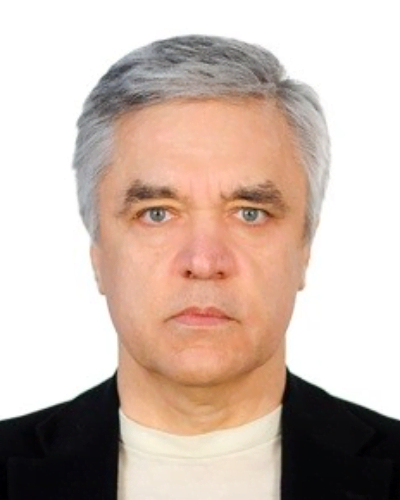
Vice-Director
N.D. Zelinskii Institute for Organic Chemistry of the Russian Academy of Sciences, Russian Federation
Abstract:
A person’s biological traits are determined by the interactions of hundreds of genes and gene networks, as well as external factors such as diet and exercise. Combining and then investigating these multiple databases with powerful statistical tools, allows a new understanding of how genetic intricacy drives health and disease and so leads to a closer personalized medical approach that targets each individual’s unique genetic make-up. In this sense, a patient’s genotype can yield important information concerning disease systems-related susceptibility and the effectiveness of medications, therefore guiding specific, targeted imaging, treatment and rehabilitative therapies.
For instance, sepsis is a systemic inflammatory response to infection, ranging from systemic inflammatory response syndrome (SIRS) to septic shock and multiple organ dysfunction syndromes (MODS), whilst being the most common cause of death in intensive care patients. In reality, sepsis is the body's extreme response to an existing infection to transform into a life-threatening medical emergency. So, the treatments may need to be adapted to the continuous and rapid changes of the disease, making it challenging to identify a single target.
Identifying drug-response phenotypes by examining interactions between phenotypes and sepsis therapies is a priority to optimize clinical trials. Adaptive trials (response-adaptive randomization) should be performed if endophenotypes are not available or when multiple endophenotypes (identified by measuring OMICS markers) are present. Use of electronic health records should be explored to identify such endophenotypes, whose replication in multiple datasets require big data with harmonization across multiple sites to determine the robustness of such endophenotypes for sepsis prognosis.
Antibiotics and intensive care units have dramatically improved sepsis treatment, and there is hope that immunotherapy can further improve outcomes. However, despite many attempts to introduce novel therapeutic molecules, there has been no step change in survival rates.
The remarkable progress in the field of sepsis and its complications can be attributed to the latest advances in OMIC-technologies and sepsis modeling, together with a better understanding of the immunopathology, biology and epidemiology of sepsis syndrome. Experimental models of sepsis can provide a clear understanding the pathophysiology of sepsis and confirm its evolution to septic shock.
The focus of the biodesign-driven translational research and applications is nowadays on the interplay between therapies, pathogens, and the host. Regarding the pathogen-inducer, microbiologic diagnostic approaches are discussed, as well as multi-targeted (combinatorial) treatment, since sepsis is certainly the sum of multiple host-microbial interactions.
Other topics include the disruption of host immune system and the use of specific biomarkers in sepsis management and patient stratification. Previous attempts at reducing mortality with multi-cytokine mediation have failed to reduce mortality across all patient parameterizations and motivated us to investigate whether adaptive, personalized multi-cytokine mediation can control the trajectory of sepsis and lower patient mortality. But the other approaches focusing on adaptive and personalized multi-cytokine mediation therapy, could be a promising future for treating sepsis.
Among the latest innovations in the field, for instance, ImmunoSep, illustrating the advanced innovations in personalized immunotherapy and developing a next-generation theranostics platform for the personalized targeted immunotherapy, aims at significantly improving the treatment outcome of sepsis in individual patients.
The role of the dysregulated immune response in the pathophysiology of sepsis, coupled with the diversity of microbial endotypes and final phenotypes it encompasses, highlights the need for a PPM-related approach, focusing on the immune classification of sepsis into macrophage activation-like syndrome (MALS), immunoparalysis, and intermediate state, which are recognized in sepsis and proposed as stratification for personalized adjuvant immunotherapy. It is seen and thus proven that sepsis encompasses substantial diversity at the host level, and current clinical decision tools fail to measure the dysregulation of the immune response. Meanwhile, OMICS-based technologies integrated under IT algorithms offer a more precise snapshot of the sepsis pathophysiology by studying the structure, function, and dynamics of the genome, transcriptome, metabolome, and proteome within the human organism. For instance, genome-wide transcriptome analysis identified several endotypes that reflect the immunological stages during sepsis and correlate with different outcomes. IT algorithms outperform traditional scoring systems in pre-early diagnosis and risk stratification and have shown positive impacts on survival when applied in the intensive care unit. A theranostic approach in sepsis uses biomarkers that predict response to a specific therapy and allow the measurement of response to treatment and should guide the design of clinical trials. The integration of Omics with electronic medical records through IT algorithms will facilitate the identification of predictive phenotypes and biomarkers for the individualized sepsis-related cases.
Finally, PPM in sepsis entails making an early and accurate microbiologic diagnosis, determining the host immune response signature and assessing individual response to treatment, in order to tailor therapy to the specific needs of each individual patient. So, sepsis requires the physician to accurately place the patient in the appropriate cohort that is relevant to the test being used and that is designed for the individual patient, or at least for a homogeneous group of patients who share specific characteristics. In this sense, PPM and its unique resources are likely to be harder to use in sepsis than in some other clinical settings.
Following the above-mentioned, the next step will be the implementation of PPM-related resources to sepsis management, based on theranostic methodology (combining specific targeted therapy based on specific targeted diagnostics), which, being a highly individualized approach, will be essential for the design of novel care pathways, including the modes of personalized immunotherapy. The theranostics platform of the future will be based on a multidimensional systems biology analysis of OMICS-based data sets, to identify clinically relevant biomarkers and therapeutic targets for PPM-related clinical efficacy. But bioinformatics and Big Data analyses to identify potential (rare) genotypes and associations are expected to play a significant role in the future of sepsis management, whilst securing a unique bridge between the pathology, translational armamentarium and IT algorithms. And, globally, the advent of high-throughput technologies and the remarkable progress in the field of bioinformatics has allowed the sub-classification of many pathological conditions to provide better understanding of life-threatening infections in people to improve their recovery and rehabilitation.
Along with canonical Precision Surgery (PS), PS-PR is most likely to play a great role in post-operative PR management and treatment. And we are entering an era of rapidly evolving transformation in translational and clinical research as it relates to medical practice, and a shifting paradigm of standardized health care in which detailed genetic and molecular information regarding a patient’s conditions is being used for PS-PR-based manipulations.
Meanwhile, a lack of the medical guidelines has been identified by the majority of responders as the predominant barrier for adoption, indicating a need for the development of best practices and guidelines to support the implementation of PS-PR! So, coordination of all health care stakeholders has become more important than ever to unite surgeons, pathologists, physicians and payers to work with Big Pharma and Biotech to develop products, services, and coverage policies that would improve patient outcomes and lower overall health care costs for institutions that put personalized regimens in place. This is the reason for developing global scientific, clinical, social, and educational projects in the area of PS-PR to elicit the content of the new branch and to stress the impact and benefits of the latter.
We are offering a new view on the management of PPM in sepsis-related PS-PR which, to our mind, strongly stresses the need to discuss the management of PS-PR on an individual basis in an interdisciplinary context, in order to offer the best possible surgical, therapeutic and rehabilitative approach. In this sense, the infrastructure of the Center for Precision Surgery & Personalized Rehabilitation (CPSPR) should have, at least, four essential components: 1) genomic/molecular data acquisition and storage, 2) integration of genomic diagnostic testing and targeted imaging, 3) research focused on functional genomic targets, and 4) development and informed use of targeted therapies of actionable genes. Moving forward, clear and centralized consensus on actionable genes is needed.
We will promote educational programs in PS-PR and encourage more basic scientists, clinical scientists, surgeons, pathologists, and physicians to participate in PS-PR in the different phases of the model, with the ultimate goal being to significantly improve healthcare quality by utilizing personal genomic-phenomics-related information to guide choice of rehabilitative treatment and restoration.
Biography:
Sergey Suchkov was born in the City of Astrakhan, Russia, in a family of dynasty medical doctors. In 1980, graduated from Astrakhan State Medical University and was awarded with MD. In 1985, Suchkov maintained his PhD as a PhD student of Sechenov University and Institute of Medical En-zymology. In 2001, Suchkov maintained his Doctor Degree at the National Institute of Immunology, Russia. From 1989 through 1995, a Head of the Lab of Clinical Immunology, Helmholtz Eye Re-search Institute in Moscow. From 1995 through 2004 - a Chair of the Dept for Clinical Immunology, Moscow Clinical Research Institute (MONIKI). In 1993-1996. At present, Dr Sergey Suchkov, MD, PhD, is: Vice-Director for Research and Development of the National Center for Human Photosynthesis, Aguascalientes, México. Member of the New York Academy of Sciences, USA; Russian Academy of Natural Sciences, Russia; American Chemical Society (ACS), USA; American Heart Association (AHA), USA; Euro-pean Association for Medical Education (AMEE), Dundee, UK; EPMA (European Association for Predictive, Preventive and Personalized Medicine), Brussels, EU; ARVO (American Association for Research in Vision and Ophthalmology); ISER (International Society for Eye Research); Personalized Medicine Coalition (PMC), Washington, DC, USA.
© 2026 Mathews International LLC. All rights reserved.
