
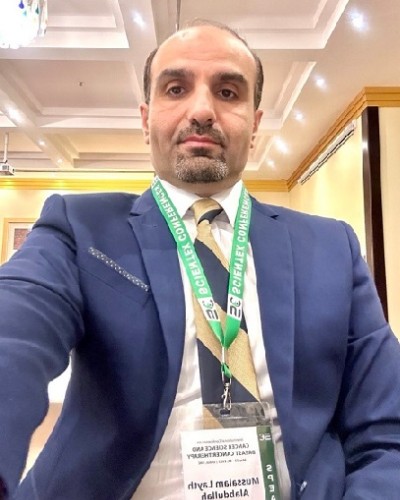
pediatric surgeon and surgical oncologist
General Medical Council and Alnoor University, United Kingdom
Abstract:
Background: Central venous access devices (CVADs) are essential in paediatric oncology and in children with difficult venous access. However, their use is associated with mechanical and infectious complications. This study evaluates indications, technical approaches, complications, and catheter-related infection rates in a consecutive paediatric cohort.
Methods: A prospective analysis was conducted on 53 paediatric patients undergoing CVAD insertion at a tertiary center. Data collected included age, gender, indication, insertion technique, line type, access vein, catheter dwell time (CVAD-days), reason for removal, and surgical complications. Descriptive statistics were calculated. Infection rate was expressed per 1,000 catheter-days. Complication rates were reported as proportions.
Results: Fifty-three CVAD insertions were analysed. The mean age was 102.6 months (8.5 years) (median 117 months). There were 30 males (56.6%) and 23 females (43.4%). The main indication was Oncology cases, 48 (90.6%) and lack of peripheral venous access: 5 (9.4%). The Non-tunnelled anaesthetic lines was predominant at 43 (81.1%), then PICCs: 8 (15.1%) and Tunnelled lines: 2 (3.8%). Regarding the access site, Internal jugular vein (IJV) was utilised in 47 cases (88.7%) followed by the Cephalic vein 6 (11.3%). However, no subclavian access was used. Interestingly, the mean catheter dwell time was 31.4 days, totalling 1,662 catheter-days. Removal was performed mainly for anaesthetic line replacement, 44 (83.0%). Infection: 5 (9.4%), end of treatment: 2 (3.8%) and other causes (leak/dislodgement): 2 (3.8%) were the remaining reasons. The catheter-related infection rate was 3.0 per 1,000 catheter-days with no major life-threatening events.
Conclusion: Central venous access insertion in pediatric patients demonstrated a high safety profile with a low rate of major complications. Internal jugular access was the predominant and safe approach. These findings support the continued use of ultrasound-guided CVAD insertion in paediatric oncology settings.
Biography:
Dr Mussalam Alabdullah is a UK-trained paediatric surgeon and surgical oncologist with a PhD in Oncology from the University of Nottingham. He holds Membership of the Royal College of Surgeons of England (MRCS), Fellowship European Board of Paediatric Surgery (FEBPS) and advanced fellowships training in paediatric surgery. His expertise lies in complex oncologic resections, multidisciplinary tumour management, and research-led surgical practice. With internationally recognized publications and extensive UK clinical training, he is dedicated to elevating cancer surgical standards and developing high-quality oncologic services in Iraq.
Copyright 2024 Mathews International LLC All Rights Reserved
